
Pilates for People Who Say They’re “Not Flexible Enough”
A common misconception is that you need to be flexible to start pilates. We hear this a lot when talking with people who are new to Pilates. In today’s world of everyone posting their fanciest party tricks on social media, it makes sense that people might feel intimidated by some of the advanced moves they see demonstrated online.
Whether your hesitation is flexibility, strength, coordination, balance, or something else, we’d argue that Pilates is exactly where you should be.
In his book Return to Life Through Contrology, Joseph Pilates wrote that his method “develops the body uniformly, corrects wrong postures, restores physical vitality, invigorates the mind, and elevates the spirit.”
In other words, Pilates was never intended exclusively for people who are already strong, flexible, or coordinated. Quite the opposite! The system is designed to develop the body as a whole, addressing areas of weakness, restriction, and imbalance to create more efficient, balanced movement.
You don’t need to be flexible to start Pilates. Developing flexibility is part of the point!
And here’s where the beauty of the Pilates system comes into play. Whether you’re practicing on a mat, reformer, Cadillac, chair, or other apparatus, the exercises are designed to build upon one another, progressively developing strength, mobility, coordination, and control. In classical Pilates, this is why the order of exercises matters so much. Contemporary Pilates applies the same general principle, though the sequencing may look different.
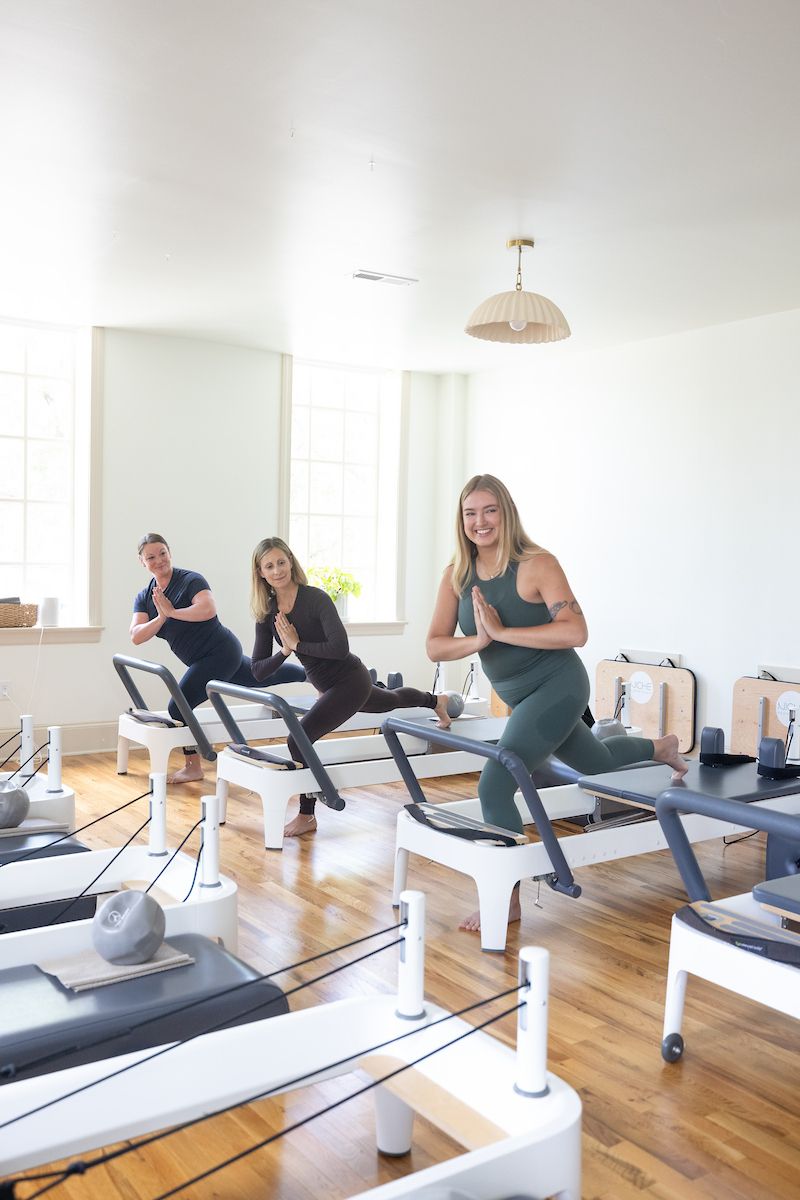
Regardless of the specific style of Pilates, or whether you’re working individually or in a group setting, a skilled instructor will guide you through movements with intention, taking into account the abilities and limitations of the bodies in front of them. What that looks like will depend on the nature of your session.
In a private session, your instructor will first familiarize themselves with your specific situation, including your goals, preexisting conditions, contraindications, and any other relevant factors. As they guide you through movements, they’ll also observe how your body responds and adapt their approach accordingly.
This is why, if you have a particularly specialized need, private sessions may be the best place to start, at least until you become more familiar with the movements and develop the body awareness to make informed decisions about how to adapt your Pilates practice to your own needs.
In a group class, your instructor may do a more abbreviated intake (another reason to arrive a little early for your first session!) and offer options throughout class that allow you to choose the modification or amplification that best suits your body.
For example, someone with tight hamstrings might struggle to straighten their legs fully during an exercise. Rather than forcing the movement, an instructor might encourage them to bend their knees, reduce their range of motion, or use a prop for support. They’re still getting the benefits of the exercise, just in a way that’s appropriate for their body. As their flexibility and strength improve, they can gradually work toward a fuller expression of the movement.
In this setting, a little more responsibility falls on the client to recognize their own limitations and make appropriate choices. Developing that body awareness is itself an important part of the Pilates practice, but it’s also why communicating with your instructor is so valuable, especially when you’re just getting started.
Regardless of where you start, Pilates is designed to meet you where you are and help you move toward where you want to be. Over time, you may begin to notice improvements in the areas where you’ve felt limited or imbalanced. And who knows? Maybe one day you’ll find yourself posting your own intimidating videos of all your fancy tricks!
Curious to begin your Pilates practice but not sure which class type is best suited to your needs? Our team at Niche would be happy to chat with you about where to begin.
Explore our class schedule and find your starting point at Niche.